








News
How Fault Passage Indicators Enable Faster Fault Location in MV Distribution Networks
Date:2026-06-22
Medium Voltage (MV) distribution networks are the backbone of modern power systems, delivering electricity from substations to industrial, commercial, and residential consumers. When a fault occurs on an overhead distribution line, utilities face the challenge of locating the fault quickly and restoring power as soon as possible.
Traditional fault location methods often require extensive patrols and manual inspections, leading to prolonged outages and increased operational costs. Fault Passage Indicators (FPIs) provide an effective solution by helping utilities identify the faulted section of the network rapidly and accurately.
This article explores how FPIs enable faster fault location in MV distribution networks and why they have become an essential component of modern distribution automation systems.
What Is a Fault Passage Indicator?
A Fault Passage Indicator (FPI) is a monitoring device installed on medium-voltage overhead lines or underground cable networks. Its primary function is to detect fault currents and indicate whether a fault has passed through a specific point in the network.
When a short circuit or earth fault occurs, the FPI detects the abnormal current and activates a visual indicator, remote alarm, or communication signal to inform operators of the fault's location.
Modern FPIs can support:
- Short-circuit fault detection
- Earth fault detection
- Remote monitoring and reporting
- SCADA integration
- Wireless communication technologies such as 4G, NB-IoT, LoRaWAN, or RF networks
Challenges of Fault Location in MV Distribution Networks
Locating faults in MV overhead networks can be difficult due to several factors:
Long Feeder Lengths
Distribution feeders often extend over tens of kilometers, especially in rural areas. Finding the exact fault location without monitoring devices can be time-consuming.
Complex Network Topology
Many distribution systems contain multiple branches and interconnected feeders, making fault isolation more challenging.
Limited Visibility
Traditional protection devices can identify that a fault exists but may not indicate the exact section where the fault occurred.
Increased Outage Costs
Every minute of service interruption impacts customer satisfaction, utility performance indicators, and operational expenses.
How Fault Passage Indicators Work
Fault Passage Indicators continuously monitor current and voltage conditions on the distribution line.
Normal Operation
During normal operation, the FPI records load current and remains inactive.
Fault Detection
When a fault current exceeds a predefined threshold, the device detects the abnormal condition and records the event.
Typical fault types include:
- Phase-to-phase faults
- Phase-to-ground faults
- Three-phase short circuits
Fault Indication
After detecting a fault, the FPI activates an indicator such as:
- Flashing LED signal
- Mechanical flag indicator
- Remote alarm transmission
- SCADA event notification
Utility personnel can immediately determine whether the fault passed through a specific point on the feeder.
Benefits of Faster Fault Location
Reduced Outage Duration
Faster fault identification allows utilities to isolate the affected section and restore power to healthy areas more quickly.
This directly improves reliability metrics such as:
- SAIDI (System Average Interruption Duration Index)
- SAIFI (System Average Interruption Frequency Index)
Lower Operational Costs
Utilities spend fewer resources on fault patrols and manual inspections.
Benefits include:
- Reduced labor costs
- Fewer vehicle deployments
- Lower maintenance expenses
Improved Customer Satisfaction
Shorter outage durations improve service quality and reduce customer complaints.
Enhanced Network Reliability
By accelerating fault response and restoration, FPIs contribute to a more resilient and reliable distribution network.
Integration with Distribution Automation Systems
Modern FPIs are increasingly integrated into smart grid infrastructures.
When connected to communication networks, FPIs can automatically transmit fault information to:
- SCADA systems
- Distribution Management Systems (DMS)
- Outage Management Systems (OMS)
This enables operators to monitor fault conditions in real time without sending personnel into the field.
Advanced smart FPIs can provide:
- GPS location data
- Fault direction indication
- Event logging
- Remote configuration
- Cloud-based monitoring
The combination of FPIs and distribution automation significantly enhances situational awareness and operational efficiency.
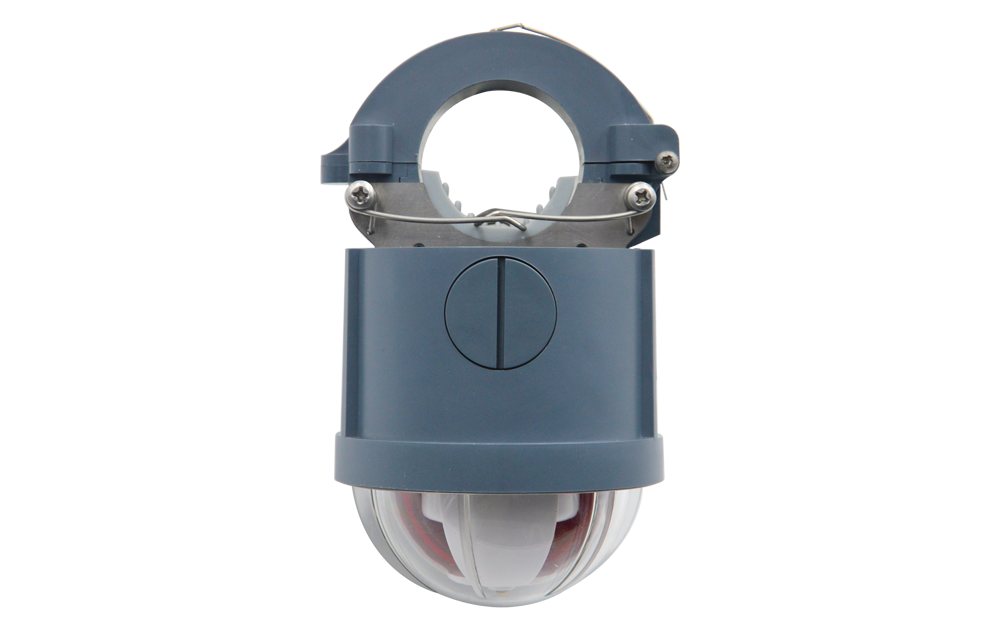
Four-Faith Smart Fault Circuit Indicators for MV Distribution Networks
As distribution networks become increasingly automated, utilities require fault indicators that not only detect faults accurately but also provide real-time information for faster decision-making.
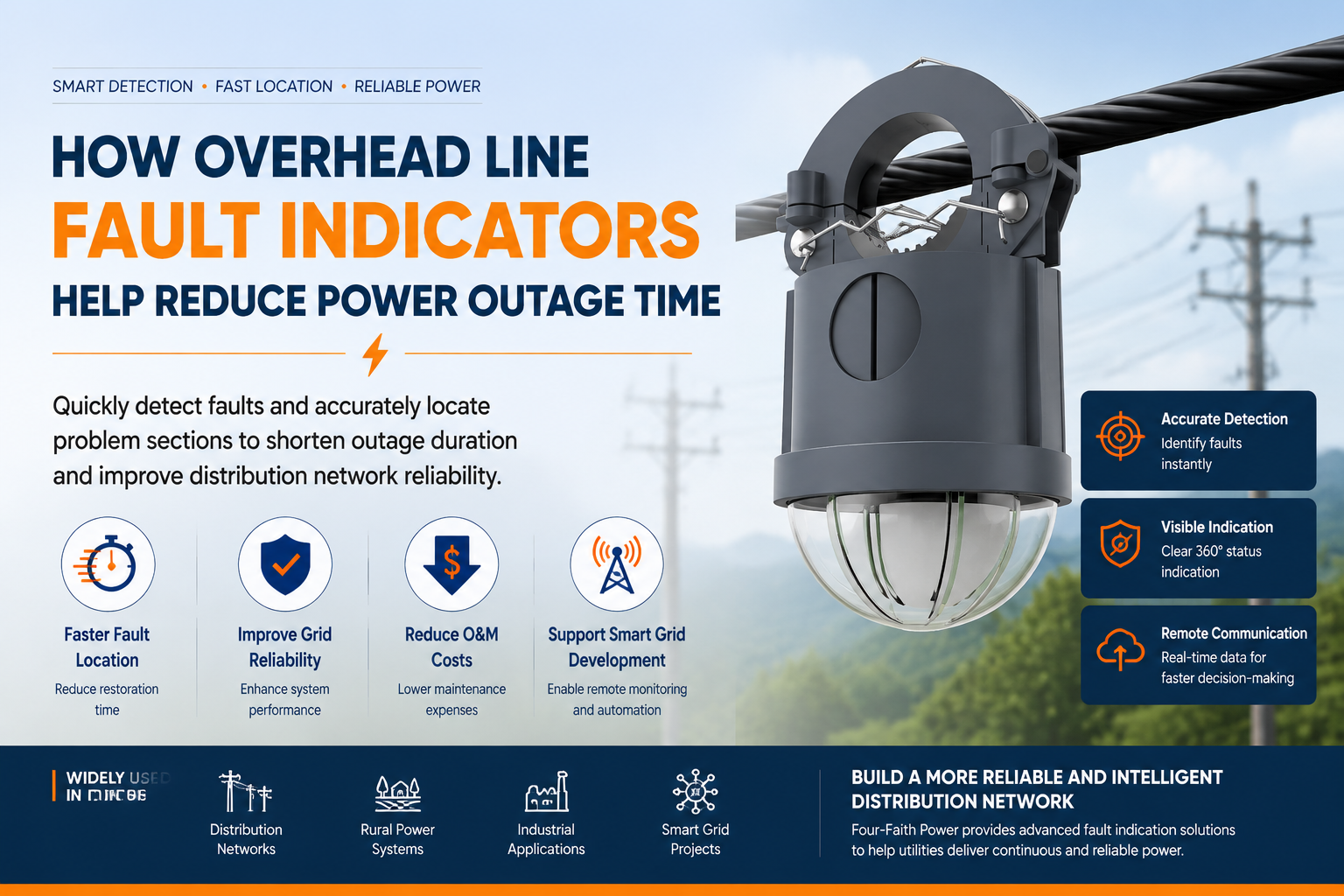
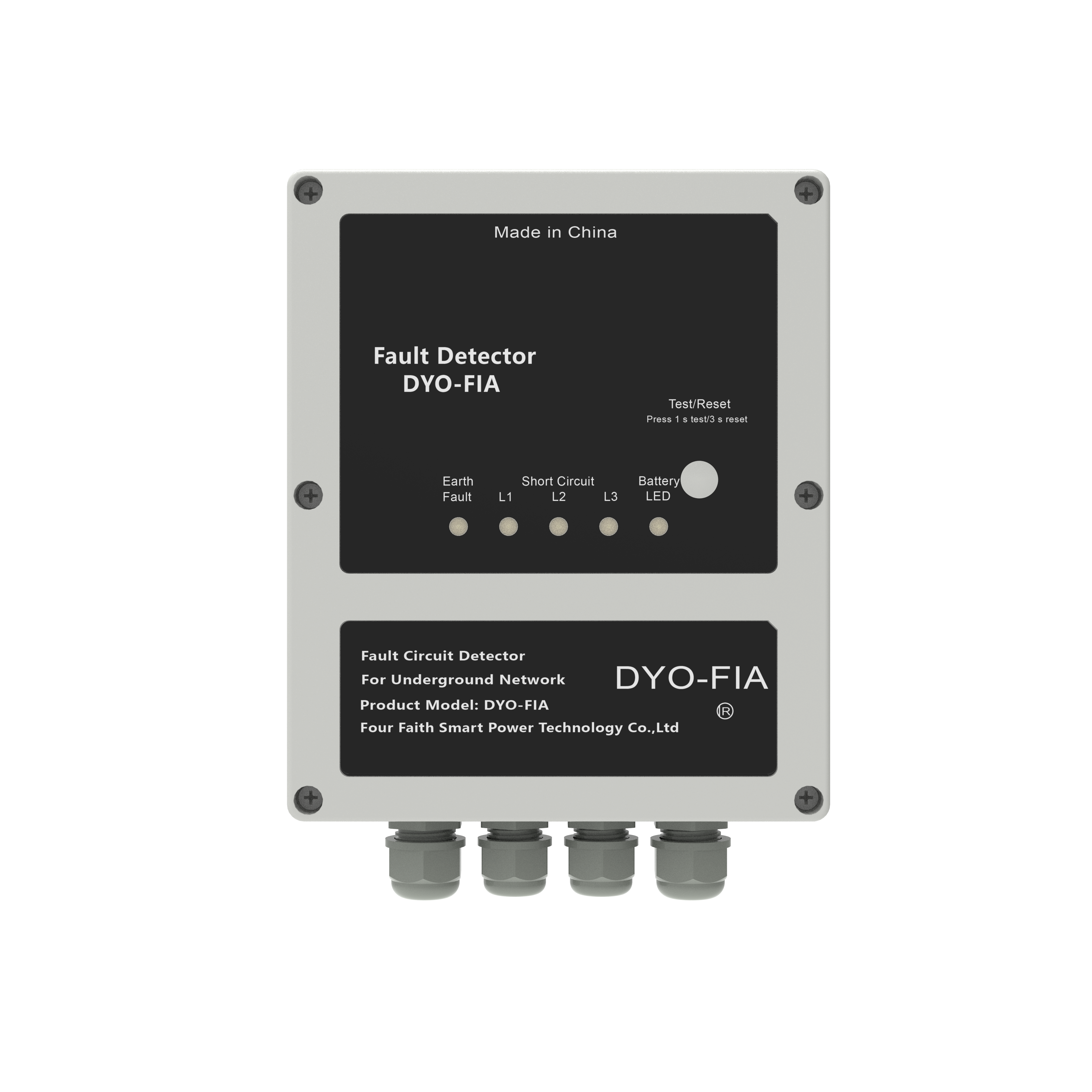
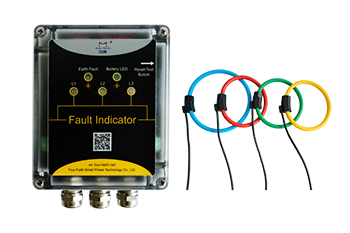
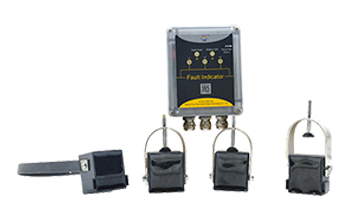
Four-Faith offers a comprehensive range of Fault Circuit Indicators (FCIs) designed for both overhead and underground medium-voltage distribution networks. These solutions help utilities quickly identify faulted sections, reduce outage duration, and improve overall network reliability.
Key Features of Four-Faith Fault Circuit Indicators
Accurate Short-Circuit and Earth Fault Detection
Four-Faith fault indicators can detect both short-circuit faults and single-phase earth faults, enabling maintenance teams to accurately identify the affected network section and accelerate restoration activities.
Local and Remote Fault Indication
Fault events can be displayed locally through ultra-bright LEDs or mechanical flags while simultaneously transmitting fault information to the control center via cellular communication networks. This allows operators to identify fault locations without extensive field inspections.
SCADA Integration
The system supports communication with SCADA and distribution automation platforms, enabling real-time fault monitoring, remote diagnostics, and centralized asset management.
Long-Term Reliable Operation
Powered by line current with integrated backup batteries, Four-Faith overhead fault indicators are designed for long service life and reliable operation in harsh outdoor environments. Some models provide more than 10 years of maintenance-free operation.
Flexible Communication Options
Four-Faith solutions support multiple communication technologies, including 4G, 3G, and LoRa networks, ensuring reliable connectivity for utilities operating across large geographical areas.
Applications
Four-Faith Fault Circuit Indicators are widely used in:
- 5–38kV overhead distribution networks
- Underground cable distribution systems
- Smart grid modernization projects
- Rural electrification programs
- Distribution automation and FLISR applications
- Utility fault location and outage management systems
Conclusion
Fault Passage Indicators have become an essential component of modern MV distribution networks. By providing rapid fault detection, precise fault location, and real-time communication capabilities, they help utilities reduce outage duration, lower maintenance costs, and improve network reliability.
For utilities seeking to modernize their distribution networks, Four-Faith Smart Fault Circuit Indicators provide a proven solution for overhead and underground fault monitoring, remote fault reporting, and seamless integration with distribution automation systems. Whether deployed as standalone fault indicators or as part of a comprehensive smart grid solution, they help utilities locate faults faster and restore power more efficiently.
RECOMMEND NEWS

RECOMMEND PRODUCTS
top
- Products
- Distribution Automation
- Outdoor Apparatus
- Fault Circuit Indicator
- Industrial Wireless Communication
- Software
- Solutions
- Utility Solutions
- Infrastructure Solutions
- Services
- Documents & Software
- Support
- Business Case
- Video
- about us
- Company
- Contact us
- Subscribe
- Career

Mobile viewing


© Copyright 2026 by www.fourfaithpower.com. All Rights Reserved. 闽ICP备08106834号-8