








News
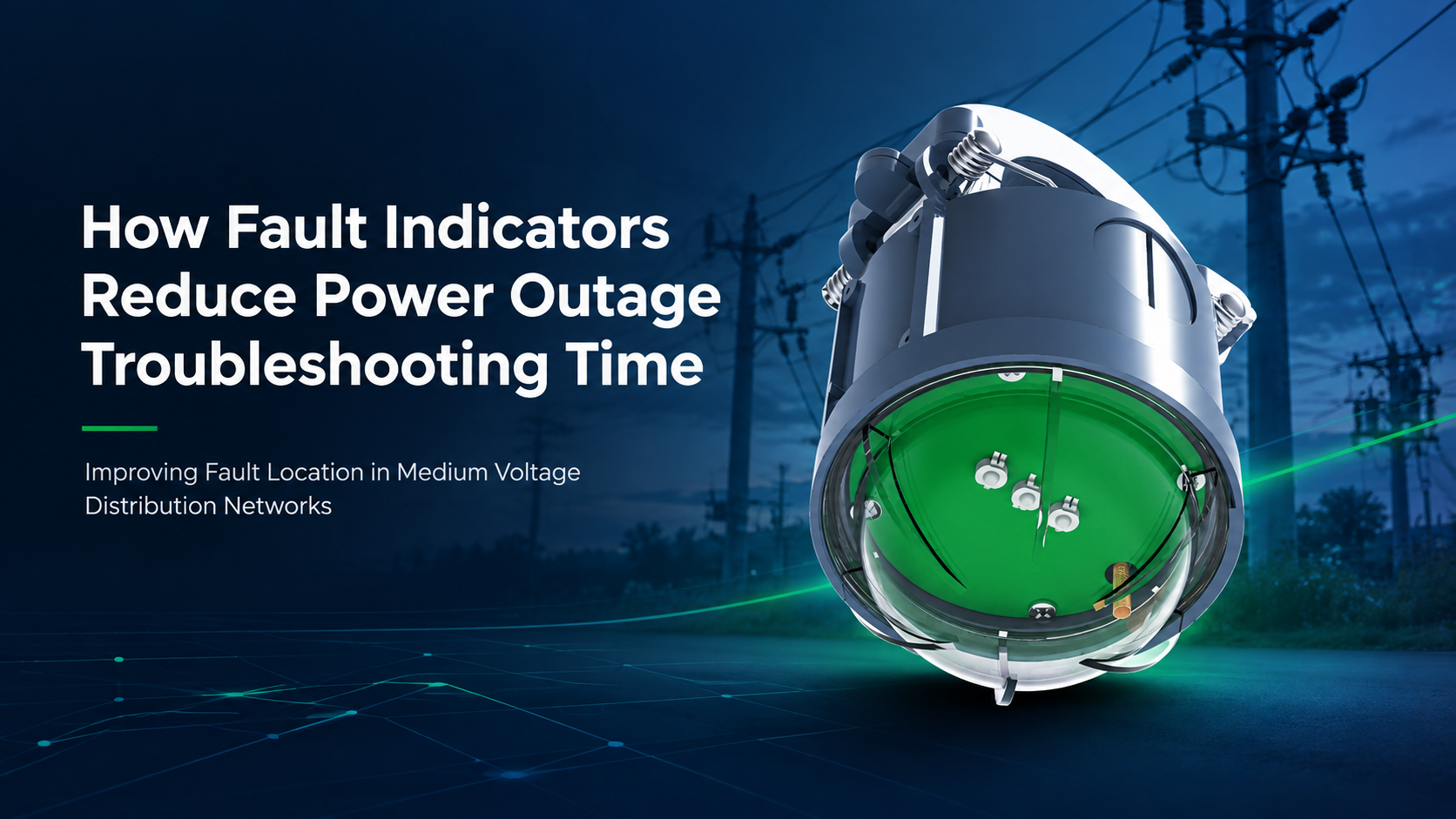
How Fault Indicators Reduce Power Outage Troubleshooting Time ?
Date:2026-10-10
Power outages in medium voltage distribution networks can affect power supply reliability and increase maintenance costs. When a fault occurs, utility operators need to identify the fault location quickly to restore power and minimize service interruptions.
Fault indicators help speed up fault location by showing whether a short-circuit or earth fault has passed through a specific point in the distribution network.This allows maintenance teams to narrow down the affected section and reduce unnecessary field inspections.
1. Faster Fault Location
Without fault indicators, maintenance teams may need to inspect multiple sections of a distribution line to locate the problem. This process can take considerable time, especially in long overhead lines or complex distribution networks.
By installing fault indicators at selected points, operators can check their status and identify the likely faulted section more efficiently. This helps reduce the time spent searching along the network.
2. Reduced Field Inspection Work
Fault indicators provide visible or remote fault status information, depending on the device type. Maintenance personnel can use this information to determine which sections require closer inspection.
For remote monitoring applications, indicators equipped with compatible communication functions can transmit fault information to a control center. This may reduce the need for repeated site visits and improve maintenance efficiency.
3. Faster Power Restoration
Once the likely fault location has been identified, operators can isolate the affected section and restore power to unaffected parts of the network, where the system configuration and operating procedures allow.
By supporting faster fault identification and more targeted maintenance, fault indicators can help utilities reduce outage duration and improve distribution network reliability.
4. Improved Distribution Network Management
Modern fault indicators can support short-circuit and earth fault detection in medium voltage distribution systems. Depending on the model, they may offer features such as local status indication, remote communication, and integration with distribution automation systems.
These functions help operators obtain fault information more efficiently and make better-informed maintenance decisions.
Conclusion
Fault indicators are valuable tools for improving fault location efficiency in medium voltage distribution networks. By helping maintenance teams identify the likely faulted section, reducing unnecessary inspections, and supporting faster restoration procedures, they contribute to more reliable power distribution.
Looking for fault indicators for your distribution network? **Contact our team to learn more about our short-circuit and earth fault indicator solutions.
RECOMMEND NEWS


RECOMMEND PRODUCTS

top
- Products
- Distribution Automation
- Outdoor Apparatus
- Fault Circuit Indicator
- Industrial Wireless Communication
- Software
- Solutions
- Utility Solutions
- Infrastructure Solutions
- Services
- Documents & Software
- Support
- Business Case
- Video
- about us
- Company
- Contact us
- Subscribe
- Career

Mobile viewing


© Copyright 2026 by www.fourfaithpower.com. All Rights Reserved. 闽ICP备08106834号-8

