







News
Feeder Protection Relay vs Overcurrent Relay: What’s the Difference?
Date:2026-04-28
In power distribution systems, protection devices are essential for ensuring safety, stability, and uninterrupted operation. Two commonly used terms are feeder protection relay and overcurrent relay.
Although they are closely related, they are not the same. Understanding the difference is important when designing or selecting a protection system.
What Is a Feeder Protection Relay?
A feeder protection relay is a comprehensive protection device used to monitor and protect an entire feeder circuit in a power distribution system.
A feeder is the line that delivers electrical power from a substation to downstream loads such as:
- Industrial plants
- Commercial buildings
- Residential areas
A feeder protection relay typically includes multiple protection functions, such as:
- Overcurrent protection
- Earth fault protection
- Voltage protection
- Frequency protection
- Breaker failure protection
👉 In short:
It is a multi-function protection system for feeder lines
What Is an Overcurrent Relay?
An overcurrent relay is a protection device designed specifically to detect excessive current in a circuit.
It operates when current exceeds a preset threshold, usually caused by:
- Short circuits
- Overloads
- Ground faults
Its main job is simple:
👉 Detect high current → Send trip signal → Disconnect circuit breaker
👉 In short:
It is a single-function protection device focused only on current
Key Differences Between Feeder Protection Relay and Overcurrent Relay
| Feature | Feeder Protection Relay | Overcurrent Relay |
| Function | Multi-protection functions | Current-based protection only |
| Scope | Entire feeder system | Single protection element |
| Complexity | Advanced digital device | Simple protection function |
| Protection types | Overcurrent, earth fault, voltage, frequency, etc. | Only overcurrent |
| Application | Substations, industrial systems, smart grids | Basic protection circuits |
| Flexibility | High | Limited |
How They Work Together
In many real-world systems, these two are not competitors—they work together.
A feeder protection relay may include overcurrent protection as one of its built-in functions.
For example:
- Overcurrent relay acts as a basic protection function
- Feeder protection relay acts as a complete protection solution
👉 Think of it like this:
- Overcurrent relay = single tool
- Feeder protection relay = full toolkit
Why Feeder Protection Relays Are Becoming More Popular
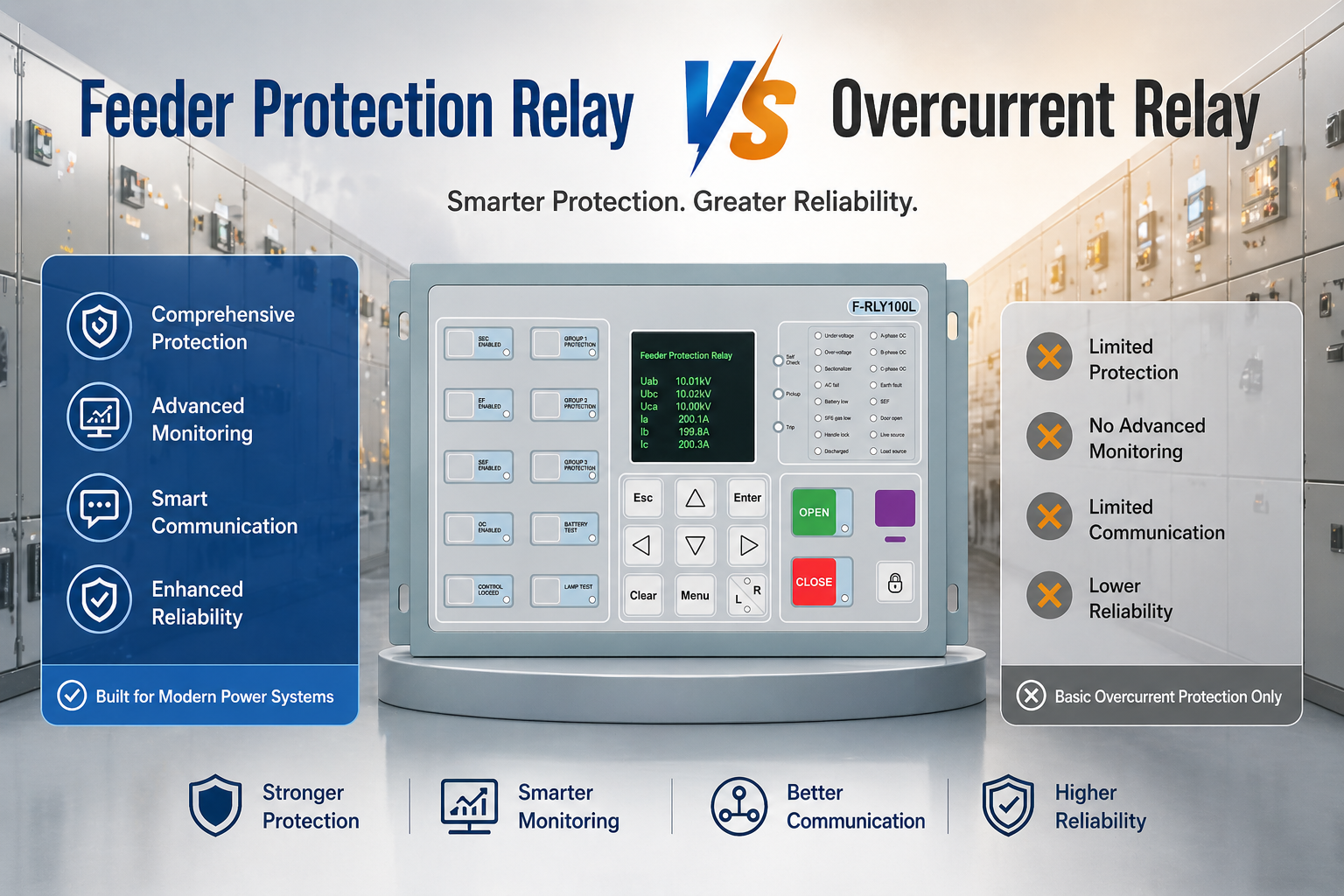
Modern power systems are becoming more complex. Because of this, simple protection is often not enough.
Feeder protection relays are preferred because they offer:
- Multiple protection functions in one device
- Better coordination between protection levels
- Digital communication (Modbus / IEC 61850)
- Fault recording and diagnostics
- Easier system integration
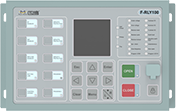
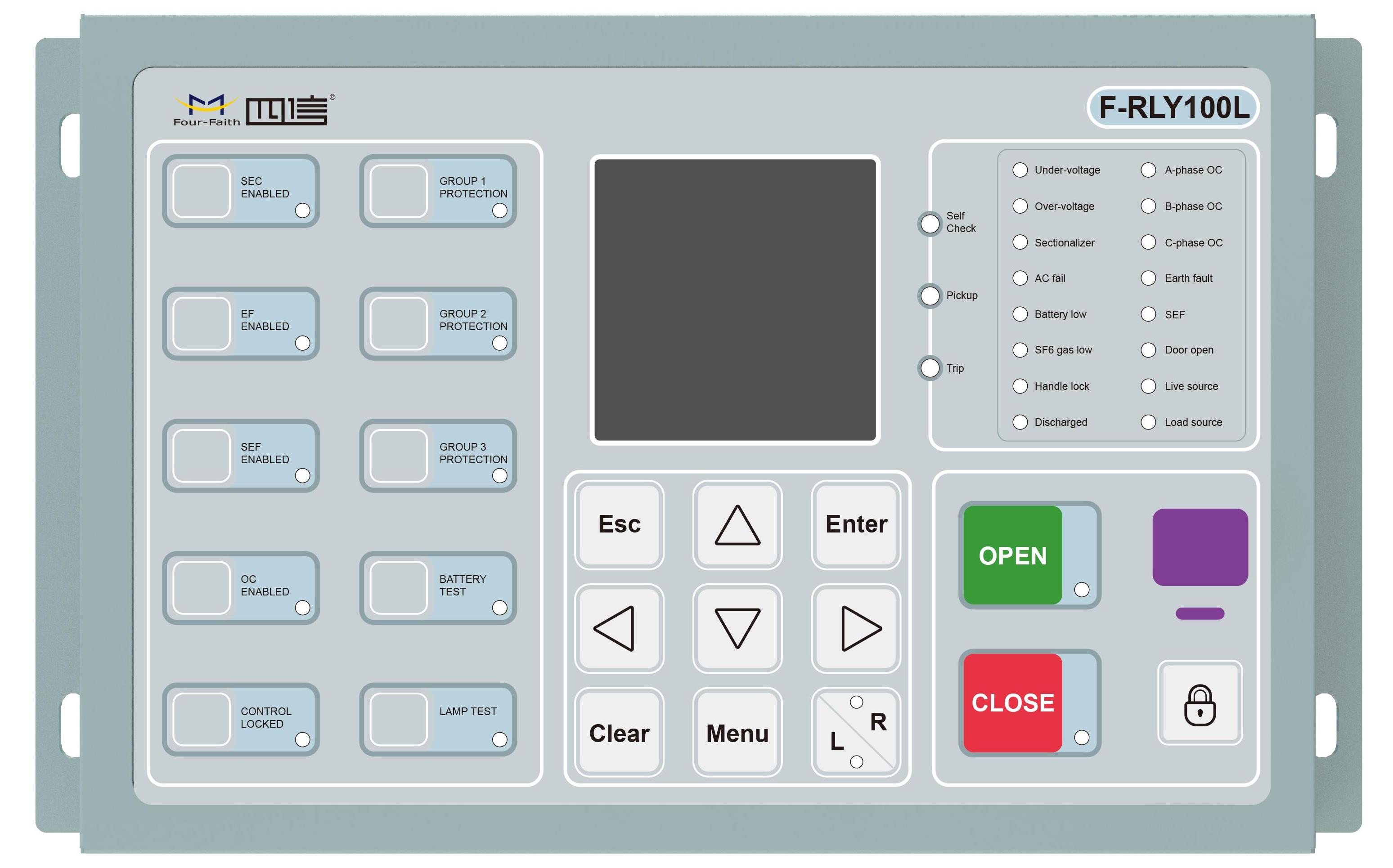
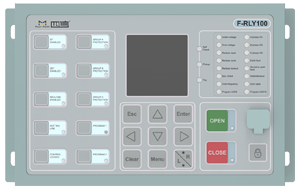
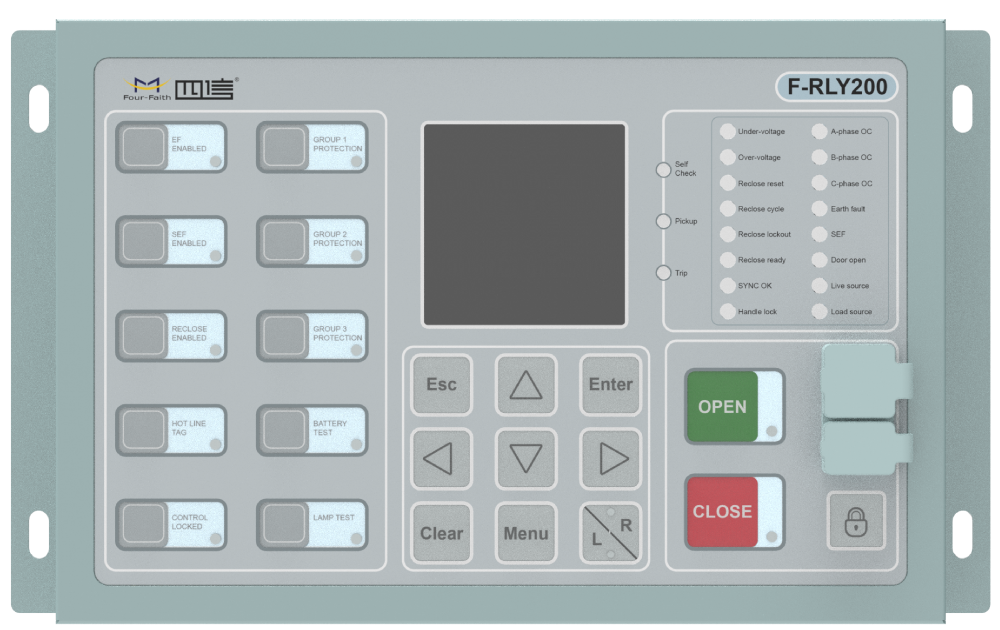
For example, advanced solutions like the F-RLY100 Feeder Protection Relay are designed to handle multiple protection tasks in modern distribution systems efficiently.
Which One Should You Use?
It depends on your system:
- If you need basic protection for simple circuits → Overcurrent relay is enough
- If you need complete feeder protection with multiple functions → Feeder protection relay is the better choice
👉 In modern industrial and utility systems, feeder protection relays are generally preferred.
Conclusion
While both devices are used for electrical protection, their roles are different:
- Overcurrent relay = simple, current-based protection
- Feeder protection relay = advanced, multi-function protection system
Understanding this difference helps engineers and system designers choose the right protection strategy and improve overall system reliability.
RECOMMEND NEWS

RECOMMEND PRODUCTS
top
- Products
- Distribution Automation
- Outdoor Apparatus
- Fault Circuit Indicator
- Industrial Wireless Communication
- Software
- Solutions
- Utility Solutions
- Infrastructure Solutions
- Services
- Documents & Software
- Support
- Business Case
- Video
- about us
- Company
- Contact us
- Subscribe
- Career

Mobile viewing


© Copyright 2026 by www.fourfaithpower.com. All Rights Reserved. 闽ICP备08106834号-8