







News
How Does a Feeder Protection Relay Work? A Complete Guide for Power Systems
Date:2026-03-31
In modern power distribution systems, ensuring reliable and safe operation is critical. Electrical faults such as short circuits, overloads, and earth faults can cause severe damage to equipment and lead to costly downtime.
A feeder protection relay plays a vital role in detecting these faults and isolating the affected section of the network quickly. But how exactly does it work?
This article explains the working principle of feeder protection relays, their key functions, and why they are essential in medium-voltage (MV) power systems.
What Is a Feeder Protection Relay?
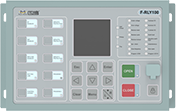
A feeder protection relay is a protective device used in electrical distribution networks to monitor and protect outgoing feeders.
Its main function is to:
· Detect abnormal electrical conditions
· Identify faults such as overload, short circuit, and earth fault
· Send a trip signal to the circuit breaker to disconnect the faulty feeder
By doing so, it ensures system stability and minimizes damage to equipment.
How Does a Feeder Protection Relay Work?
The operation of a feeder protection relay can be understood in three main steps:
1. Measurement of Electrical Parameters
The relay continuously monitors electrical parameters such as:
· Current (via Current Transformers – CTs)
· Voltage (via Voltage Transformers – VTs)
These signals are fed into the relay in real time.
2. Fault Detection and Analysis
The relay compares the measured values with predefined settings.
When abnormalities occur, such as:
· Current exceeding a set threshold (overcurrent)
· Sudden increase due to a short circuit
· Leakage current indicating an earth fault
The relay identifies the type and severity of the fault based on its protection logic.
Modern digital relays use advanced algorithms to ensure accurate and fast fault detection.
3. Tripping the Circuit Breaker
Once a fault is confirmed, the relay sends a trip signal to the circuit breaker.
The circuit breaker then:
· Opens immediately
· Isolates the faulty feeder from the rest of the system
This prevents damage to equipment and ensures that the rest of the network continues operating normally.
Key Protection Functions of Feeder Relays
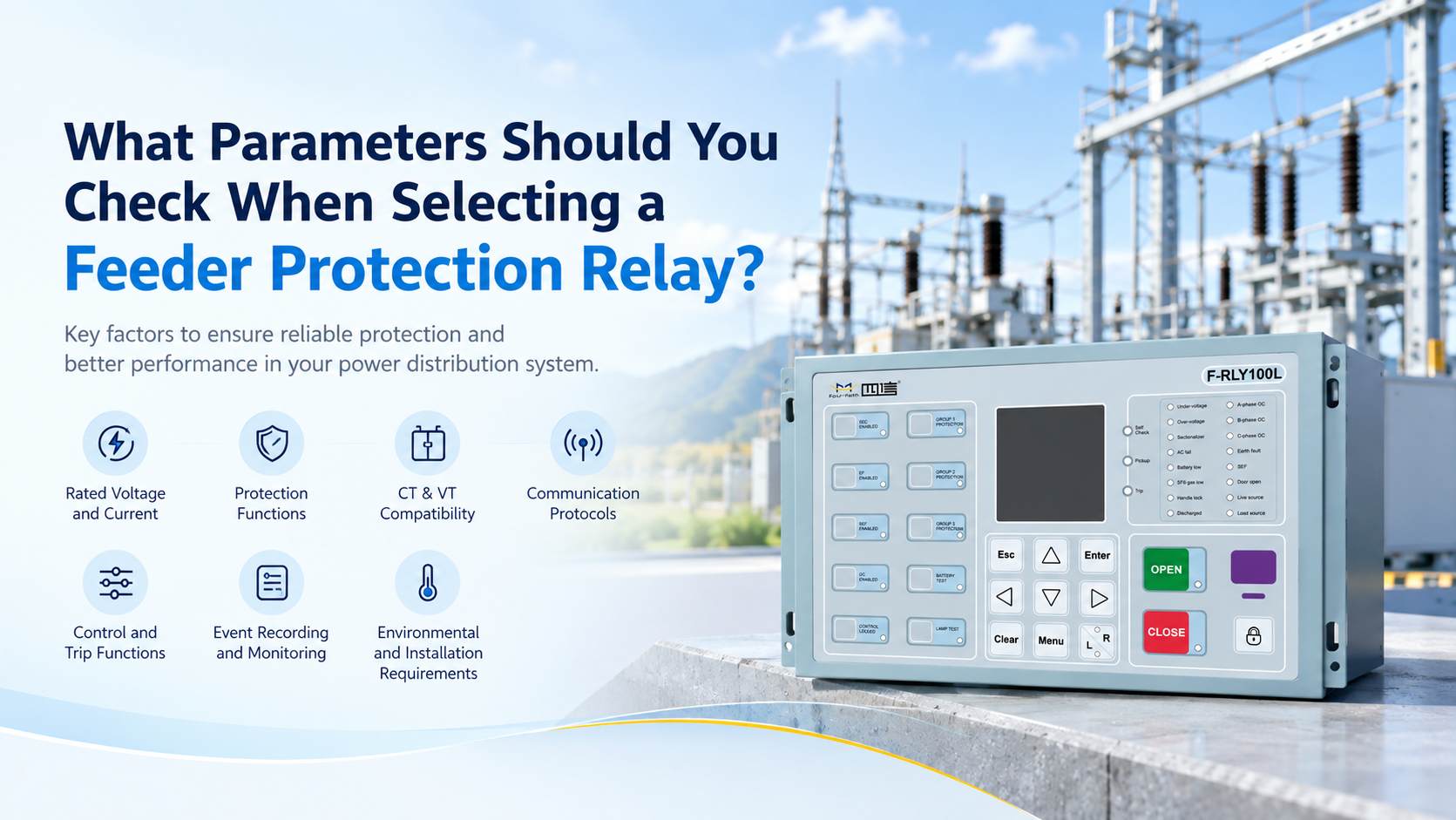
A feeder protection relay typically includes multiple protection functions, such as:
· Overcurrent Protection (50/51)
Protects against excessive current flow
· Earth Fault Protection (50N/51N)
Detects leakage currents to ground
· Short Circuit Protection
Provides rapid fault isolation
· Over/Undervoltage Protection (59/27)
Monitors voltage abnormalities
· Directional Protection (optional)
Determines the direction of fault current
These functions can be configured based on the specific application.
Where Are Feeder Protection Relays Used?
Feeder protection relays are widely used in:
· Medium-voltage distribution networks
· Substations
· Industrial power systems
· Renewable energy plants (solar/wind)
· Commercial buildings and infrastructure
They are essential wherever reliable power distribution is required
A feeder protection relay is a critical component in modern power systems. By continuously monitoring electrical parameters, detecting faults, and triggering circuit breakers, it ensures safe and reliable operation of distribution networks.
As power systems become more complex, the role of intelligent and digital feeder protection relays becomes even more important.
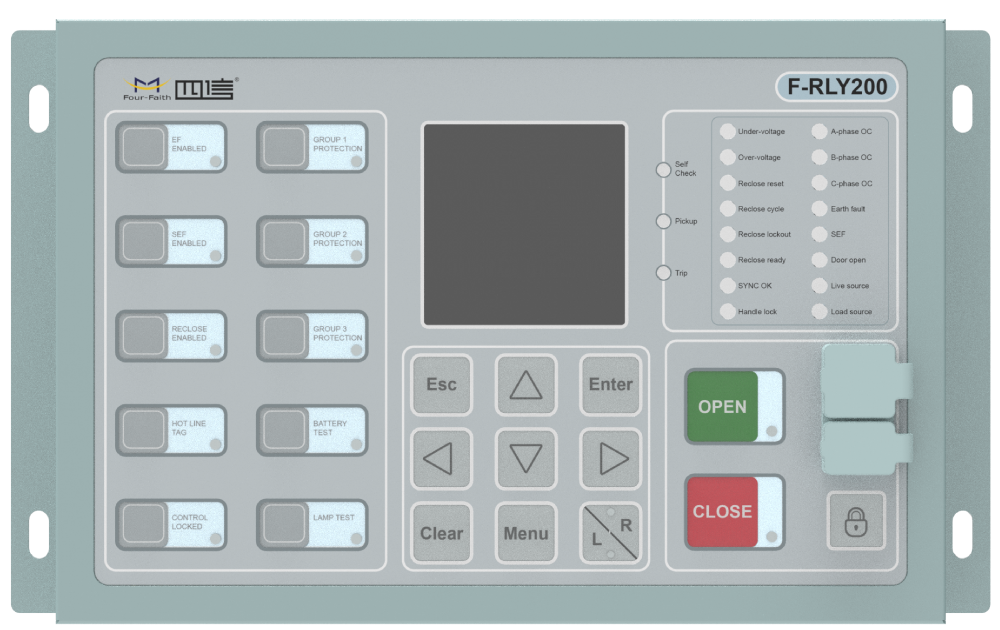
Reliable Feeder Protection Relay Solutions from Four-Faith
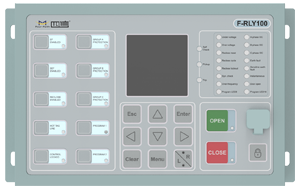
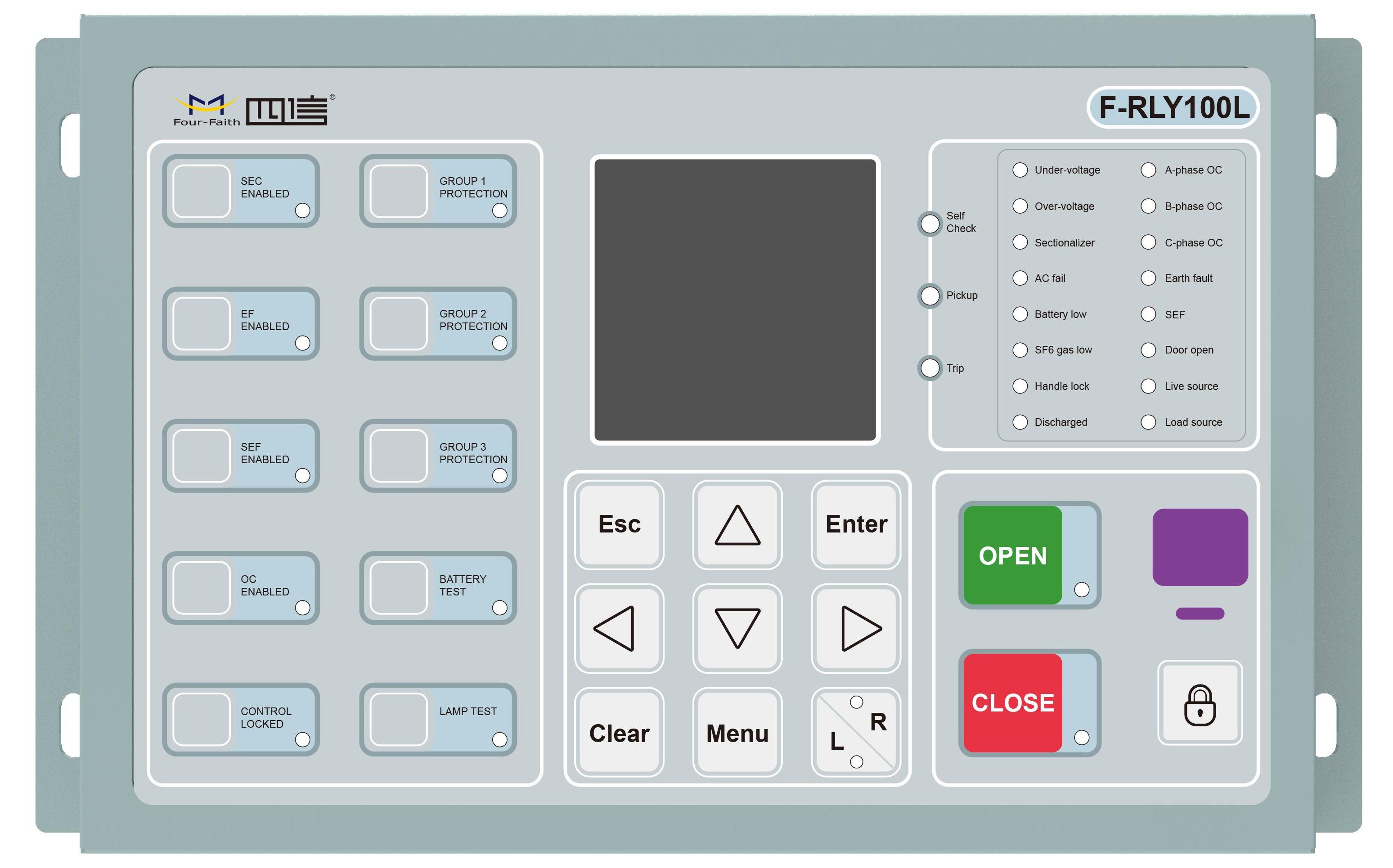
To meet the growing demands of modern power distribution, Four-Faith provides advanced and reliable protection relay solutions designed for medium-voltage applications.
Our protection relays offer:
· Accurate fault detection for overcurrent, earth fault, and short circuit conditions
· Fast tripping response to minimize system downtime
· Flexible configuration for various distribution network requirements
· Robust design suitable for harsh environments
Whether you are working on substations, industrial power systems, or renewable energy projects, our solutions are built to ensure maximum reliability and safety.
Learn more about our product here:
Protection Relay: https://www.fourfaithpower.com/protection-relay
Or contact us for customized feeder protection relay solutions tailored to your project needs.

top
- Products
- Distribution Automation
- Outdoor Apparatus
- Fault Circuit Indicator
- Industrial Wireless Communication
- Software
- Solutions
- Utility Solutions
- Infrastructure Solutions
- Services
- Documents & Software
- Support
- Business Case
- Video
- about us
- Company
- Contact us
- Subscribe
- Career

Mobile viewing


© Copyright 2026 by www.fourfaithpower.com. All Rights Reserved. 闽ICP备08106834号-8