






News
Why IEC 61850 Matters in Modern Protection Relays
Date:2026-05-15
As power systems become more digital, interconnected, and automated, communication between intelligent electronic devices (IEDs) has become a critical part of modern grid operation. Traditional protection systems relied on hardwired signals and proprietary communication protocols, which often created integration challenges and increased engineering complexity.
Today, utilities and industrial power systems are rapidly moving toward smarter substations and distribution automation. In this transition, IEC 61850 has emerged as one of the most important communication standards for modern protection relays.
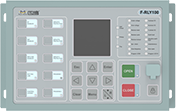
For utilities, EPC contractors, and industrial users, understanding IEC 61850 is essential when selecting a modern feeder protection relay.
What Is IEC 61850?
International Electrotechnical Commission developed IEC 61850 as an international communication standard for substation automation systems.
The standard defines:
-
Communication protocols between protection and control devices
-
Data models for intelligent electronic devices (IEDs)
-
High-speed event messaging
-
Interoperability between equipment from different manufacturers
Unlike older proprietary systems, IEC 61850 allows devices from multiple vendors to communicate within a unified architecture.
This greatly improves flexibility, scalability, and integration in modern substations and smart distribution networks.
Why Traditional Protection Communication Is No Longer Enough
Conventional relay systems often rely on:
-
Copper hardwiring
-
Serial communication
-
Vendor-specific protocols
-
Complex engineering configurations
These approaches work in basic substations but create major limitations in modern smart grids:
Common Challenges
-
Difficult integration between devices
-
Slow fault communication
-
Higher installation costs
-
Limited remote monitoring capability
-
Poor scalability for automation projects
As utilities deploy more renewable energy, distributed generation, and automated feeder systems, traditional communication methods struggle to support real-time grid operation.
This is where IEC 61850 becomes essential.
Key Benefits of IEC 61850 in Modern Protection Relays
1. Faster Protection Communication
IEC 61850 supports GOOSE (Generic Object-Oriented Substation Event) messaging, enabling ultra-fast peer-to-peer communication between relays and automation devices.
This allows:
-
Faster fault isolation
-
Improved breaker coordination
-
Reduced outage duration
-
Better system stability
In critical power systems, milliseconds matter.
2. Easier Integration Between Devices
One of the biggest advantages of IEC 61850 is interoperability.
Utilities can integrate:
-
Protection relays
-
RTUs
-
SCADA systems
-
Bay controllers
-
Reclosers
-
Metering devices
without depending entirely on a single vendor ecosystem.
This reduces long-term operational risk and engineering costs.
3. Simplified Substation Engineering
Traditional substations require large amounts of copper wiring between devices.
IEC 61850 enables:
-
Digital communication over Ethernet
-
Reduced wiring complexity
-
Easier configuration
-
Faster commissioning
This can significantly lower:
-
Installation time
-
Maintenance workload
-
Expansion costs
especially in large-scale substation projects.
4. Better Support for Smart Grid Applications
Modern distribution networks require intelligent automation functions such as:
-
Fault detection
-
Fault isolation
-
Service restoration
-
Remote monitoring
-
Distributed energy integration
IEC 61850 provides the communication foundation for these advanced smart grid applications.
It is widely used in:
-
Distribution automation
-
Smart substations
-
Renewable energy systems
-
Industrial power systems
-
Utility feeder protection networks
IEC 61850 and Feeder Protection Relays
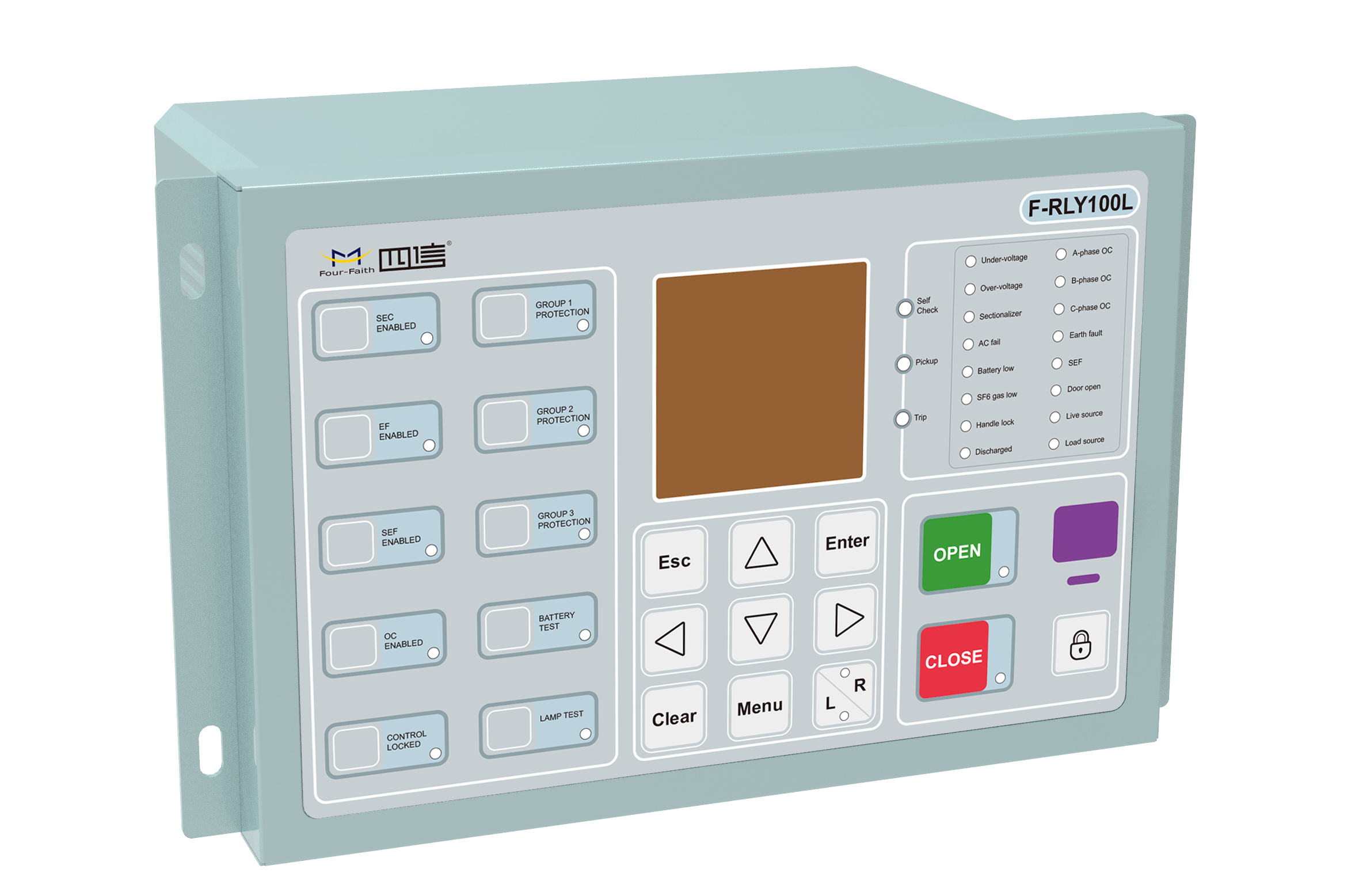
Modern feeder protection relays are no longer standalone protection devices.
They are becoming intelligent nodes within a larger automation system.
A modern IEC 61850-enabled feeder protection relay can support:
-
Real-time event reporting
-
Remote parameter configuration
-
SCADA integration
-
Fault recording
-
High-speed protection coordination
-
Self-healing grid applications
For utilities upgrading distribution infrastructure, IEC 61850 compatibility has become a key selection factor.
IEC 61850 in Renewable Energy and Smart Distribution
The rapid growth of:
-
solar power
-
wind energy
-
battery storage
-
distributed generation
has increased the complexity of power distribution systems.
Power flow is no longer one-directional.
Protection systems must now respond dynamically to changing grid conditions.
IEC 61850 enables:
-
faster data exchange
-
adaptive protection
-
distributed automation
-
remote diagnostics
making it highly valuable in renewable energy integration projects.
How to Choose an IEC 61850 Protection Relay
When selecting a protection relay for modern substations or distribution systems, important considerations include:
Communication Support
Ensure the relay supports:
-
IEC 61850
-
GOOSE messaging
-
MMS communication
-
SCADA integration
Protection Functions
Look for:
-
Overcurrent protection
-
Earth fault protection
-
Directional protection
-
Breaker failure protection
Automation Capability
Advanced relays should support:
-
Remote monitoring
-
Event recording
-
Fault analysis
-
Distribution automation
Reliability
Utility-grade relays should provide:
-
High EMC performance
-
Industrial-grade durability
-
Stable communication performance
The Future of Protection Relays Is Digital
As smart grids continue to evolve, IEC 61850 is becoming the global standard for intelligent power system communication.
Modern protection relays are no longer isolated protection devices — they are part of a fully connected digital grid infrastructure.
Utilities that adopt IEC 61850-enabled protection systems can achieve:
-
Faster fault response
-
Improved reliability
-
Lower operational costs
-
Easier scalability
-
Better renewable integration
For modern distribution automation projects, IEC 61850 is no longer optional — it is becoming essential.
Conclusion
IEC 61850 has transformed the way modern protection relays communicate, integrate, and operate within smart power systems.
By enabling interoperability, high-speed communication, and digital automation, the standard plays a vital role in modern substations and intelligent distribution networks.
As utilities continue moving toward smarter and more resilient grids, IEC 61850-enabled protection relays will remain a critical foundation for future power system development.

top
- Products
- Distribution Automation
- Outdoor Apparatus
- Fault Circuit Indicator
- Industrial Wireless Communication
- Software
- Solutions
- Utility Solutions
- Infrastructure Solutions
- Services
- Documents & Software
- Support
- Business Case
- Video
- about us
- Company
- Contact us
- Subscribe
- Career

Mobile viewing


© Copyright 2026 by www.fourfaithpower.com. All Rights Reserved. 闽ICP备08106834号-8