






News
How RTUs Enable Real-Time Monitoring in Electrical Distribution Systems (Optimized Version)
Date:2026-06-08
As electrical distribution systems evolve toward smart grids and digital substations, utilities face increasing demands for real-time visibility, faster fault response, and higher operational efficiency.
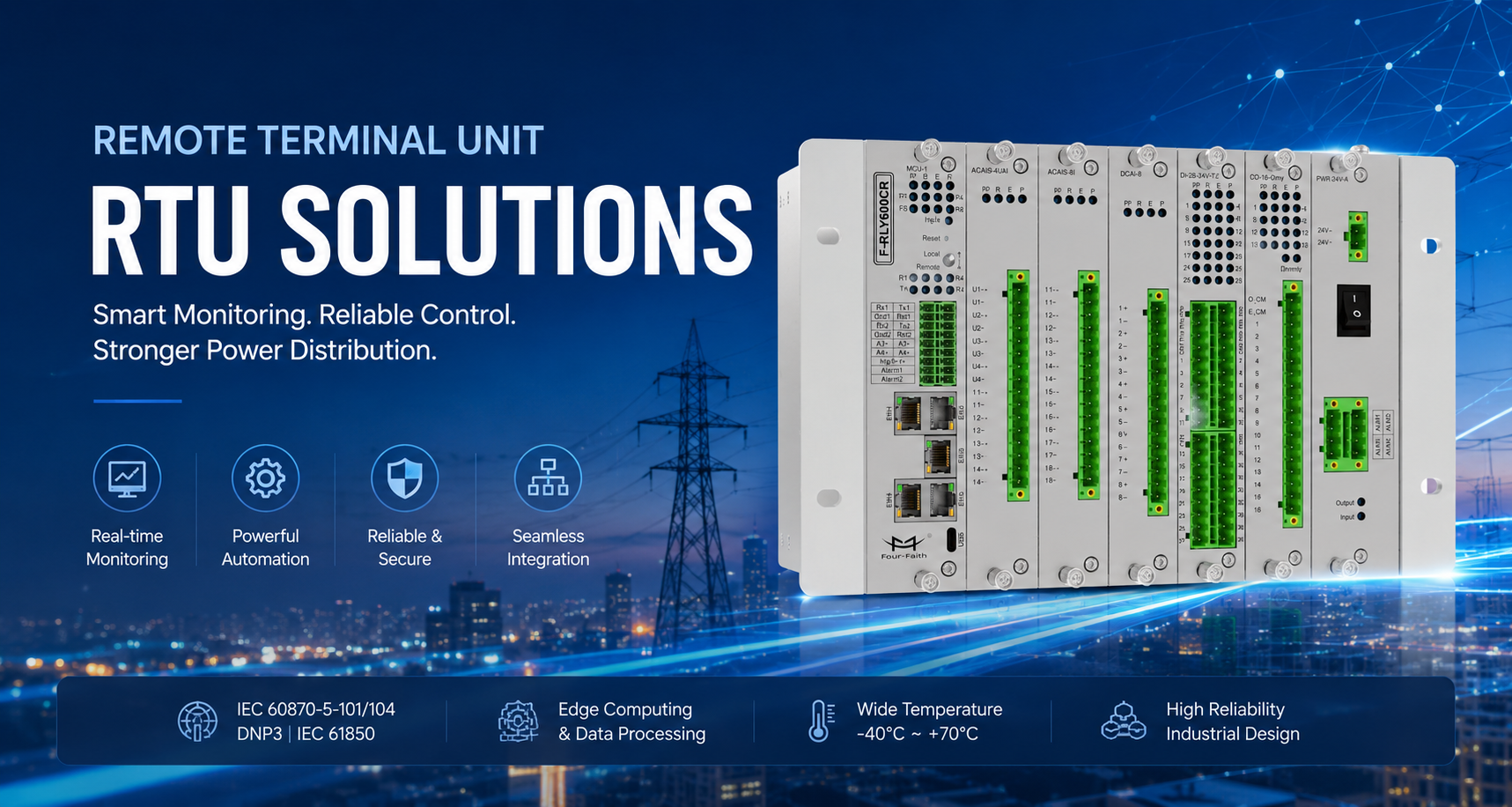
To meet these requirements, Remote Terminal Units (RTUs) have become a critical component of modern distribution automation systems. RTUs act as the interface between field equipment and SCADA systems, enabling real-time monitoring, control, and data acquisition across the grid.
Today, RTUs are no longer simple data collectors—they are intelligent edge devices supporting automation, communication, and grid optimization.
What Is an RTU in Power Distribution Systems?
A Remote Terminal Unit (RTU) is an industrial control device deployed in:
- Distribution substations
- Feeder automation points
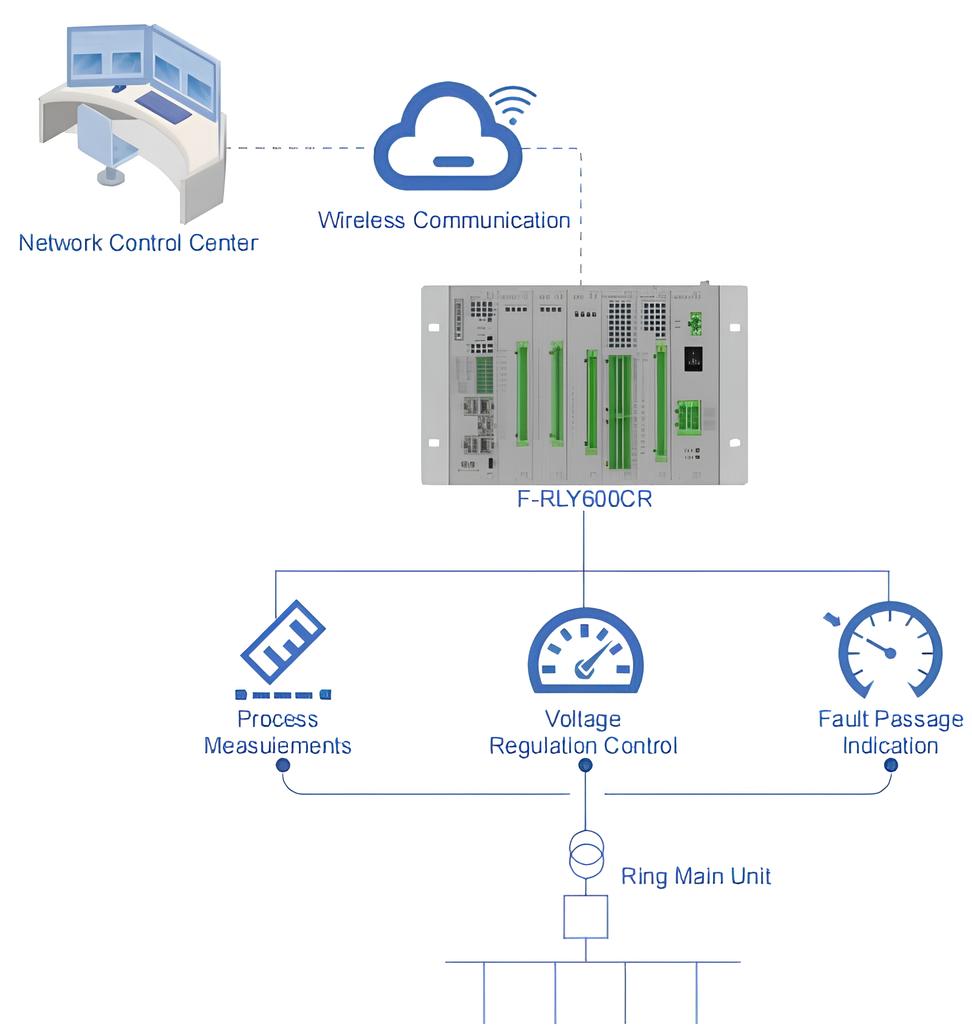
- Ring main units (RMUs)
- Distributed energy integration points
Its core functions include:
- Real-time data acquisition
- Remote monitoring and control
- Communication with SCADA/DMS systems
- Event logging and fault reporting
In modern power systems, RTUs serve as the field-level intelligence layer of distribution automation.
Key Role of RTUs in Real-Time Monitoring
Real-time monitoring in electrical distribution relies on continuous, accurate, and low-latency data flow. RTUs enable this through four key capabilities:
1. Real-Time Data Acquisition from Field Devices
RTUs collect both analog and digital signals from critical grid assets, including:
- Circuit breakers and switches
- Protection relays
- Transformers and sensors
Key electrical parameters monitored include:
- Voltage (V)
- Current (A)
- Frequency (Hz)
- Power flow direction
- Equipment status (ON/OFF/FAULT)
This enables utilities to maintain full visibility of grid conditions at all times.
2. Edge Processing for Faster Decision-Making
Modern RTUs increasingly support edge computing capabilities, allowing local processing before sending data upstream.
This includes:
- Data filtering and compression
- Threshold-based alarm detection
- Event prioritization
- Local logic execution
👉 Benefit: reduces SCADA communication load and improves response speed during grid disturbances.
3. SCADA Integration via Industrial Protocols
RTUs act as a communication bridge between field devices and control centers using standardized protocols such as:
- IEC 101 / 104
- DNP 3.0
- IEC 61850 (for digital substations)
This ensures:
- Interoperability across vendors
- Reliable data transmission
- Secure control signaling
- Real-time synchronization with SCADA/DMS systems
4. Fault Detection, Event Logging, and Alarm Reporting
One of the most critical functions of RTUs is real-time fault awareness.
When abnormal events occur, such as:
- Short circuits
- Overloads
- Ground faults
- Equipment failures
The RTU can:
- Detect the event instantly
- Generate timestamped logs
- Send alarms to control centers
- Trigger predefined local responses
👉 This significantly reduces outage duration and improves system reliability (SAIDI/SAIFI performance).
5. Remote Control and Distribution Automation
Beyond monitoring, RTUs enable remote switching and automation, including:
- Circuit breaker operation (open/close)
- Feeder reconfiguration
- Fault isolation and restoration (FLISR)
- Load transfer between feeders
This is essential for modern self-healing distribution networks.
RTUs in Smart Grid and Digital Substations
With the development of smart grids and distributed energy resources (DERs), RTUs are evolving into intelligent edge controllers.
Modern RTUs support:
- Renewable energy integration (solar, wind, storage)
- Real-time load balancing
- IEC 61850-based substation automation
- Advanced distribution management system (ADMS) integration
- Edge-based analytics and predictive monitoring
👉 RTUs are becoming a key enabler of the digital power system transformation.
Benefits of RTU-Based Real-Time Monitoring
Deploying RTUs in distribution systems provides measurable operational benefits:
Improved Grid Visibility
Operators gain full real-time insight into network status.
Faster Fault Isolation
Real-time alarms reduce fault location and repair time.
Higher System Reliability
Automation reduces manual intervention and human error.
Efficient Asset Utilization
Better load management improves infrastructure efficiency.
Renewable Energy Compatibility
RTUs help stabilize grids with high DER penetration.
Conclusion
RTUs play a foundational role in enabling real-time monitoring in electrical distribution systems. By combining data acquisition, edge intelligence, and secure communication, RTUs bridge the gap between field devices and modern SCADA/ADMS platforms.
As power systems continue evolving toward digitalization and decentralization, RTUs will remain a core component of smart grid infrastructure, enabling utilities to achieve higher reliability, efficiency, and automation.

top
- Products
- Distribution Automation
- Outdoor Apparatus
- Fault Circuit Indicator
- Industrial Wireless Communication
- Software
- Solutions
- Utility Solutions
- Infrastructure Solutions
- Services
- Documents & Software
- Support
- Business Case
- Video
- about us
- Company
- Contact us
- Subscribe
- Career

Mobile viewing


© Copyright 2026 by www.fourfaithpower.com. All Rights Reserved. 闽ICP备08106834号-8