







News
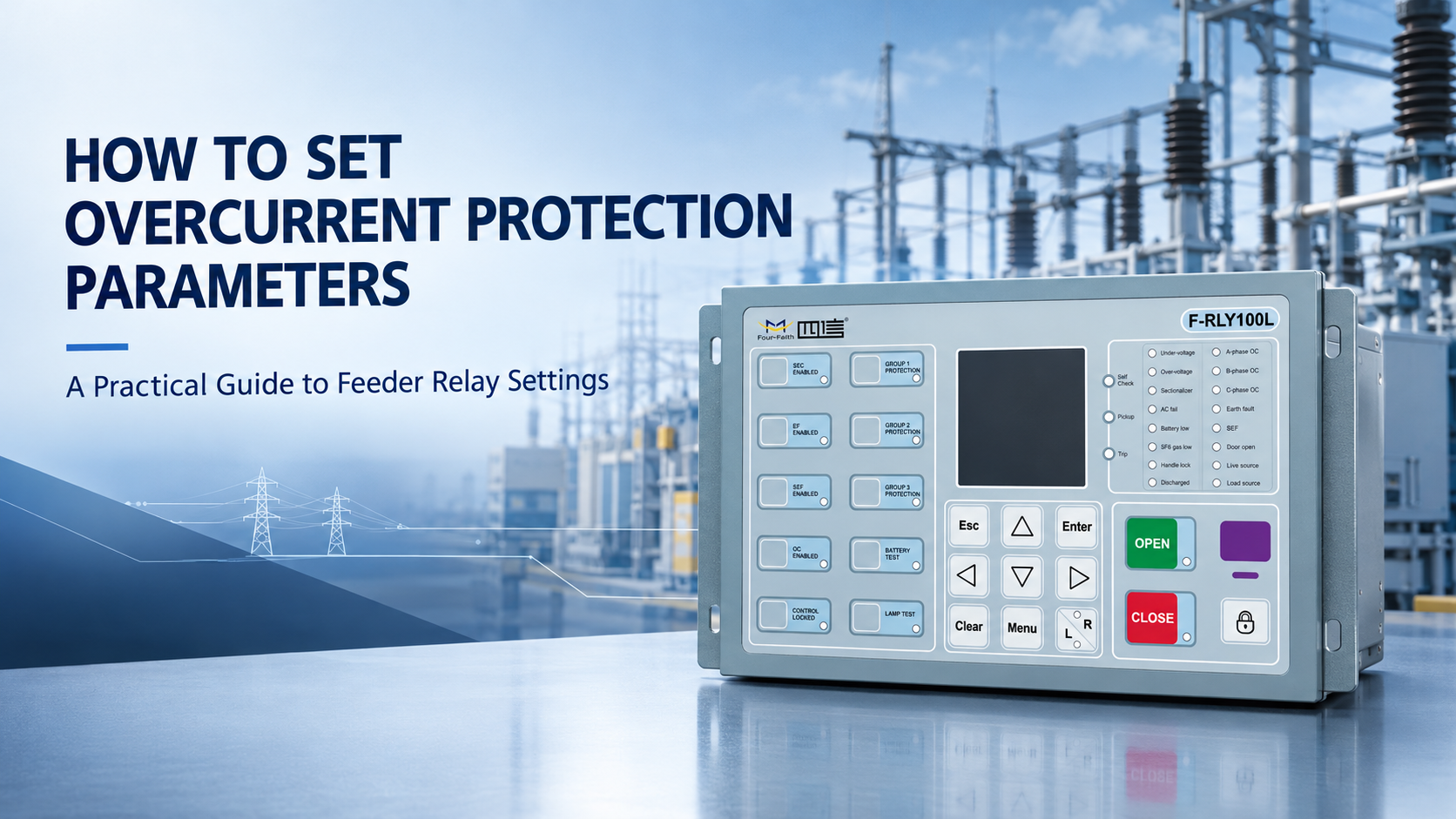
How to Set Overcurrent Protection Parameters for a Feeder Relay
Date:2026-10-19
Overcurrent protection is an essential function of a feeder protection relay in medium voltage distribution networks. Proper parameter settings help detect abnormal current conditions, isolate faults, and improve power system reliability.
But how should you set the overcurrent protection parameters for a feeder relay?
1. Determine the Feeder's Operating Current
Before configuring the relay, determine the feeder's maximum expected load current under normal operating conditions. The pickup current should be selected to allow normal load variations while remaining sensitive enough to detect faults.
Consider the feeder's rated current, load characteristics, transformer capacity, and future load growth when determining the appropriate setting.
2. Set the Overcurrent Pickup Current
The pickup current is the threshold at which the relay detects an overcurrent condition.
If the setting is too low, the relay may trip during normal load fluctuations. If it is too high, the relay may fail to detect certain fault conditions.
The pickup value should be selected based on the feeder's load current, minimum fault current, current transformer (CT) ratio, and applicable protection coordination requirements.
3. Configure the Time Delay
The time delay determines how long an overcurrent condition must persist before the relay issues a trip command.
Common options include:
- Definite-time overcurrent protection: Trips after a preset delay once the pickup threshold is exceeded.
- Inverse-time overcurrent protection:Operates faster at higher fault currents, according to the selected relay curve.
The appropriate delay depends on the protection scheme and coordination with upstream and downstream protective devices.
4. Check Protection Coordination
Feeder relay settings should coordinate with other protective devices in the distribution network. Proper coordination helps ensure that the device closest to the fault operates first, minimizing unnecessary power interruptions.
Engineers should review time-current characteristic (TCC) curves, fault current levels, and the operating characteristics of circuit breakers and upstream protection devices.
5. Test and Verify the Settings
After configuring the parameters, verify the settings against the protection study and relay manufacturer's instructions. Secondary injection testing can help confirm pickup accuracy, operating time, and trip logic.
Document the final settings and confirm that the relay operates correctly before placing the feeder into service.
Conclusion
Setting overcurrent protection parameters for a feeder relay requires careful consideration of load current, fault levels, time delays, and protection coordination. Proper configuration helps improve fault detection, operational safety, and the reliability of medium voltage distribution networks.
Looking for a reliable feeder protection relay for your application? Explore our feeder protection solutions to find a suitable option for your distribution system.
**Note:** Actual protection settings must be calculated and verified by qualified protection engineers using project-specific system data and applicable standards. The steps above are general guidance, not universal setting values.

top
- Products
- Distribution Automation
- Outdoor Apparatus
- Fault Circuit Indicator
- Industrial Wireless Communication
- Software
- Solutions
- Utility Solutions
- Infrastructure Solutions
- Services
- Documents & Software
- Support
- Business Case
- Video
- about us
- Company
- Contact us
- Subscribe
- Career

Mobile viewing


© Copyright 2026 by www.fourfaithpower.com. All Rights Reserved. 闽ICP备08106834号-8

