






News
What Parameters Should You Check When Selecting a Feeder Protection Relay?
Date:2026-09-23
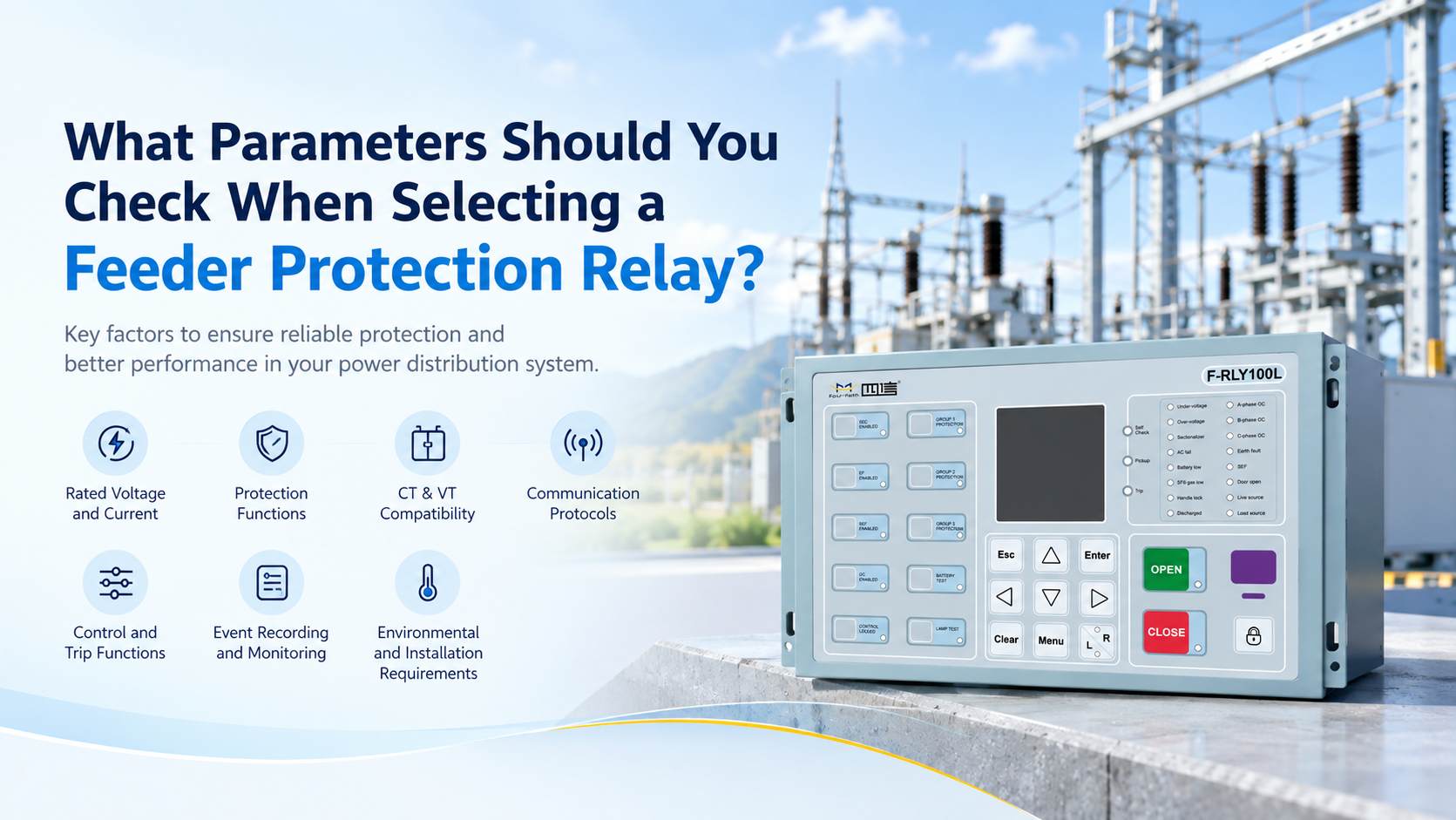
Choosing the right feeder protection relay is important for ensuring the safety, reliability, and stability of a medium-voltage power distribution system. Different applications require different protection functions, electrical ratings, and communication capabilities.
So, what parameters should you check when selecting a feeder protection relay?
1. Rated Voltage and Current
The first parameters to check are the rated voltage and rated current of the feeder.
The relay should be compatible with the operating voltage of the distribution system and the secondary signals provided by the current transformers (CTs) and voltage transformers (VTs).
For example, feeder protection applications may involve 6kV, 10kV, 11kV, 20kV, or 35kV systems, depending on the application and region.
2. Protection Functions
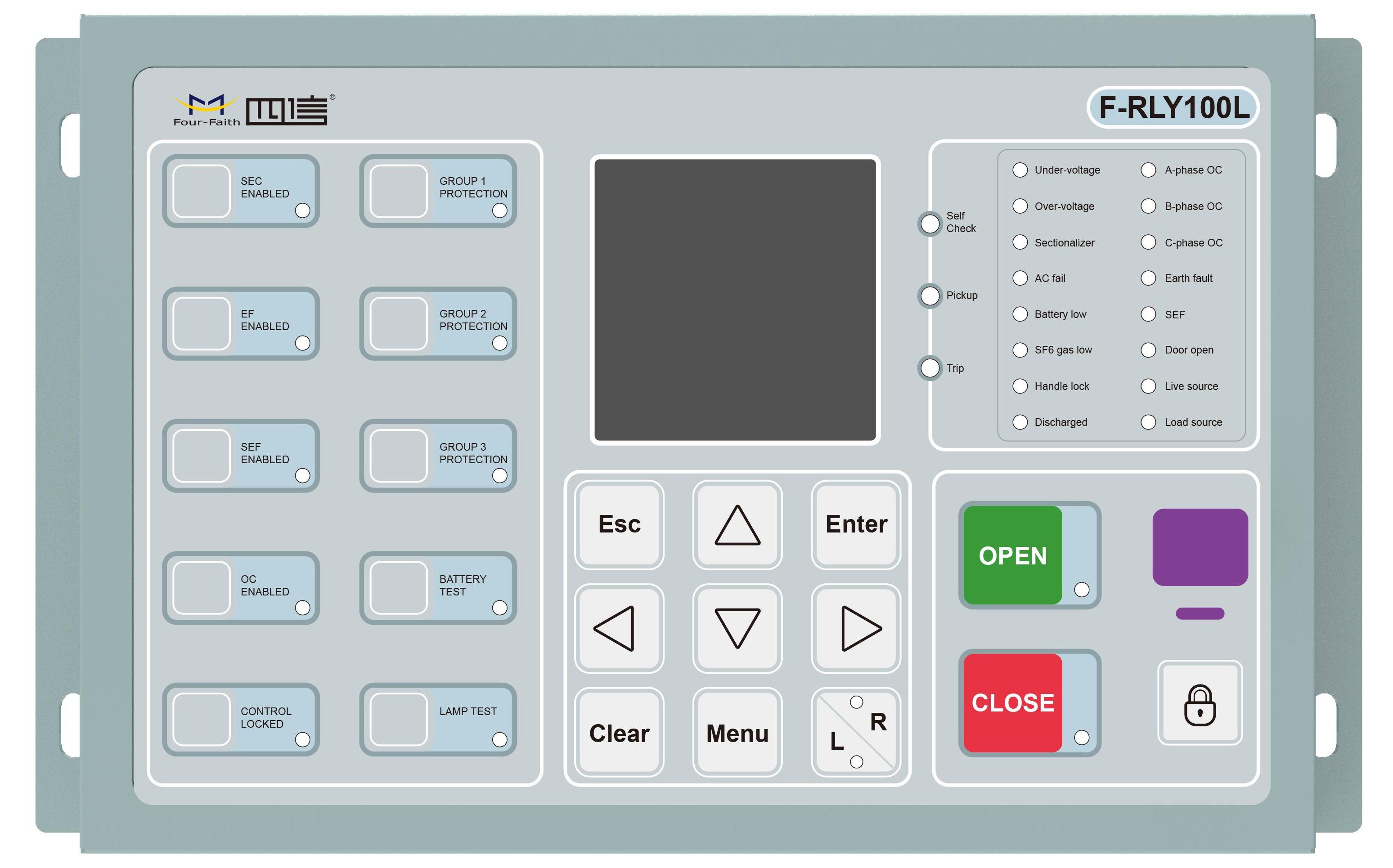
Different feeders may require different protection functions. Common functions include:
-
Overcurrent protection
-
Earth fault protection
-
Short-circuit protection
-
Overvoltage and undervoltage protection
-
Negative sequence protection
-
Frequency protection
When selecting a relay, make sure it provides the protection functions required by your distribution system.
3. CT and VT Compatibility
The relay receives electrical measurements from CTs and VTs, so their ratings and wiring configurations must be compatible with the relay.
Check parameters such as:
-
CT secondary current
-
VT secondary voltage
-
Measurement accuracy
-
Wiring configuration
-
Protection and measurement inputs
Incorrect CT or VT matching can affect protection accuracy and relay operation.
4. Communication Protocols
Modern distribution systems often require remote monitoring and control. Therefore, communication capability is another important consideration.
Depending on the system, you may need protocols such as:
-
Modbus RTU
-
Modbus TCP
-
IEC 61850
-
IEC 60870-5-103
If the relay needs to communicate with an RTU, SCADA system, or substation automation system, confirm protocol compatibility before purchasing.
5. Control and Trip Functions
A feeder protection relay should not only detect faults but may also need to send trip and closing commands to circuit breakers or other switching equipment.
Check the available:
-
Digital inputs
-
Digital outputs
-
Trip outputs
-
Closing outputs
-
Alarm outputs
This ensures the relay can work properly with the existing switchgear.
6. Event Recording and Monitoring
For troubleshooting and maintenance, event recording can be very useful.
A relay with fault records, event logs, measurements, and waveform recording can help engineers understand what happened before and during a fault.
This can significantly reduce troubleshooting time and improve system maintenance.
7. Environmental and Installation Requirements
Finally, consider where the relay will be installed.
Check:
-
Operating temperature
-
Humidity
-
Installation method
-
Enclosure requirements
-
Electromagnetic compatibility
-
Applicable standards
The relay should be suitable for the actual operating environment of the switchgear or distribution equipment.
Conclusion
Selecting a feeder protection relay is not simply about choosing a relay with the correct voltage rating. Engineers should consider electrical ratings, protection functions, CT/VT compatibility, communication protocols, control functions, event recording, and installation conditions.
By checking these parameters before purchase, you can select a feeder protection relay that provides reliable protection and integrates effectively with your power distribution system.

top
- Products
- Distribution Automation
- Outdoor Apparatus
- Fault Circuit Indicator
- Industrial Wireless Communication
- Software
- Solutions
- Utility Solutions
- Infrastructure Solutions
- Services
- Documents & Software
- Support
- Business Case
- Video
- about us
- Company
- Contact us
- Subscribe
- Career

Mobile viewing


© Copyright 2026 by www.fourfaithpower.com. All Rights Reserved. 闽ICP备08106834号-8