






News
Automatic Circuit Recloser vs Circuit Breaker: What's the Difference?
Date:2026-03-13
In modern power distribution systems, protecting electrical networks from faults is essential to maintain reliability and prevent equipment damage. Two important protection devices commonly used in distribution networks are the automatic circuit recloser and the circuit breaker.
Although both devices are designed to interrupt fault currents and protect electrical systems, they serve different purposes and operate in different ways. Understanding the differences between these two devices helps utilities and engineers choose the right protection solution for their networks.
In this article, we explain the key differences between automatic circuit reclosers and circuit breakers, including their functions, applications, and advantages.
What Is an Automatic Circuit Recloser?
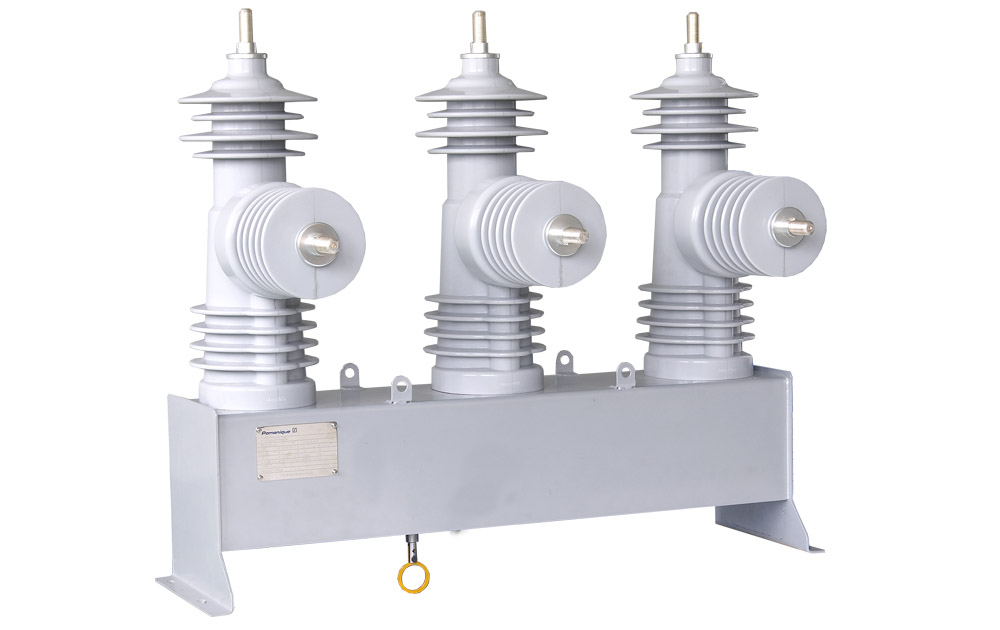
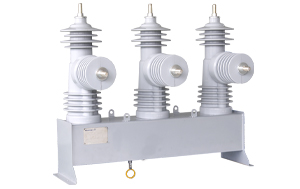
An automatic circuit recloser (ACR) is a protective device used mainly in overhead distribution lines. Its main function is to automatically detect a fault, interrupt the current, and then restore power by reclosing the circuit after a short delay.
Most faults in overhead power lines are temporary, such as those caused by:
Lightning strikes
Tree branches contacting lines
Animals touching conductors
Temporary insulation failure
An automatic circuit recloser can quickly isolate the fault and attempt to restore service automatically. If the fault disappears, power is restored without requiring manual intervention.
Typical features of automatic circuit reclosers include:
l Automatic fault detection
l Multiple reclosing attempts
l Programmable protection settings
l Remote monitoring and control
These devices are widely used by utilities to improve power supply reliability and reduce outage time.
What Is a Circuit Breaker?
A circuit breaker is a switching device designed to protect electrical circuits from damage caused by overloads or short circuits. When a fault occurs, the circuit breaker interrupts the current flow to prevent equipment damage and potential hazards.
Unlike automatic circuit reclosers, most standard circuit breakers do not automatically reclose after a fault. Once the breaker trips, it usually requires manual or remote resetting.
Circuit breakers are commonly used in:
lSubstations
lIndustrial facilities
lCommercial buildings
lPower plants
They play a critical role in protecting transformers, cables, generators, and other electrical equipment.
Automatic Circuit Recloser vs Circuit Breaker: Key Differences
Although both devices provide fault protection, their design and operational purposes are different. The following table highlights the key differences.
| Feature | Automatic Circuit Recloser | Circuit Breaker |
| Main Function | Automatically restore power after temporary faults | Interrupt current during faults |
| Automatic Reclosing | Yes | Usually No |
| Typical Application | Overhead distribution lines | Substations and electrical equipment protection |
| Fault Handling | Multiple reclosing attempts | Trips once and remains open |
| Power Restoration | Automatic | Usually manual or remote reset |
| Goal | Improve power reliability | Protect equipment and circuits |
Why Automatic Circuit Reclosers Are Important for Distribution Networks
In many power distribution systems, a large percentage of faults are temporary. If utilities relied only on circuit breakers, every temporary fault would cause a prolonged power outage.
Automatic circuit reclosers solve this problem by restoring power quickly. Their benefits include:
1. Reduced Power Outages
By automatically restoring service after temporary faults, reclosers significantly reduce outage duration.
2. Improved Grid Reliability
Utilities can maintain more stable power supply for residential, commercial, and industrial customers.
3. Reduced Maintenance Costs
Because the system restores power automatically, fewer manual interventions are required.
4. Better Protection Coordination
Reclosers can work together with protection relays, sectionalizers, and other devices to isolate faults efficiently.
When to Use a Circuit Breaker
Circuit breakers are essential in situations where equipment protection is the top priority. They are typically installed in locations where faults are likely to be permanent or where immediate isolation is required.
Typical applications include:
l Transformer protection
l Generator protection
l Industrial distribution panels
l Substation feeders
In these cases, automatic reclosing may not be desirable because repeated energization could damage equipment.
How Automatic Circuit Reclosers and Circuit Breakers Work Together
In many modern distribution networks, both devices are used together as part of a coordinated protection system.
For example:
Circuit breakers are installed at substations to protect major equipment.
Automatic circuit reclosers are installed along distribution feeders to handle temporary faults.
This coordination allows utilities to isolate faults quickly while maintaining power supply to unaffected areas.
Conclusion
Both automatic circuit reclosers and circuit breakers are essential components in power distribution systems. While they share the common goal of protecting electrical networks, their functions are quite different.
Circuit breakers primarily protect equipment by interrupting fault currents, while automatic circuit reclosers focus on restoring power automatically after temporary faults.
By combining these devices within a well-designed protection scheme, utilities can achieve both high system reliability and strong equipment protection.

top
- Products
- Distribution Automation
- Outdoor Apparatus
- Fault Circuit Indicator
- Industrial Wireless Communication
- Software
- Solutions
- Utility Solutions
- Infrastructure Solutions
- Services
- Documents & Software
- Support
- Business Case
- Video
- about us
- Company
- Contact us
- Subscribe
- Career

Mobile viewing


© Copyright 2026 by www.fourfaithpower.com. All Rights Reserved. 闽ICP备08106834号-8